My Teaching Philosophy
I believe learning and teaching should be a continuous path for both. I also believe that you have to be a learner to be a teacher. We should always be learning new concepts, perspectives, discoveries and questioning older ones. Teaching is the most malleable skill someone can have. It is always changing and adapting to different audiences and different material. My goals for learners include understanding the concepts of material enough to ask questions for further clarification and curiosity. Asking questions is a sign learners are engaged and wanting additional details of the material. It can also signify learners being comfortable and confident with the teachers as well as, showing that I have created a safe space for learning.
To meet my goals, I incorporate different mediums and outlets to convey my material. By including different visuals, verbal cues, and hands-on interactive techniques my material is more digestible. It also helps create a more intimate space so everyone has an opportunity to learn and ask questions. I evaluate learners’ work by interacting with them through activities, discussions and reflections. I believe using small quizzes, projects, discussions and low risk knowledge-based activities can be great ways to test learning. I also think longer projects and goals can give learners a chance to dive deeper into a topic, and show their knowledge over the time. Creating an inclusive teaching environment is essential for learning to take place. To create inclusivity I practice self-awareness, humility, and authenticity in all activities I teach and material I educate on. I also incorporate learners’ experiences and background to make learning more interactive and help everyone feel recognized. Asking for feedback on my teaching style and material is another great way for me to grow and change to be a better educator.
Here is an infographic I created describing the Stages of Change Model in the context of nutrition and behavior change. It discusses what each stage means for a client, and how nutrition professionals can help at each stage.
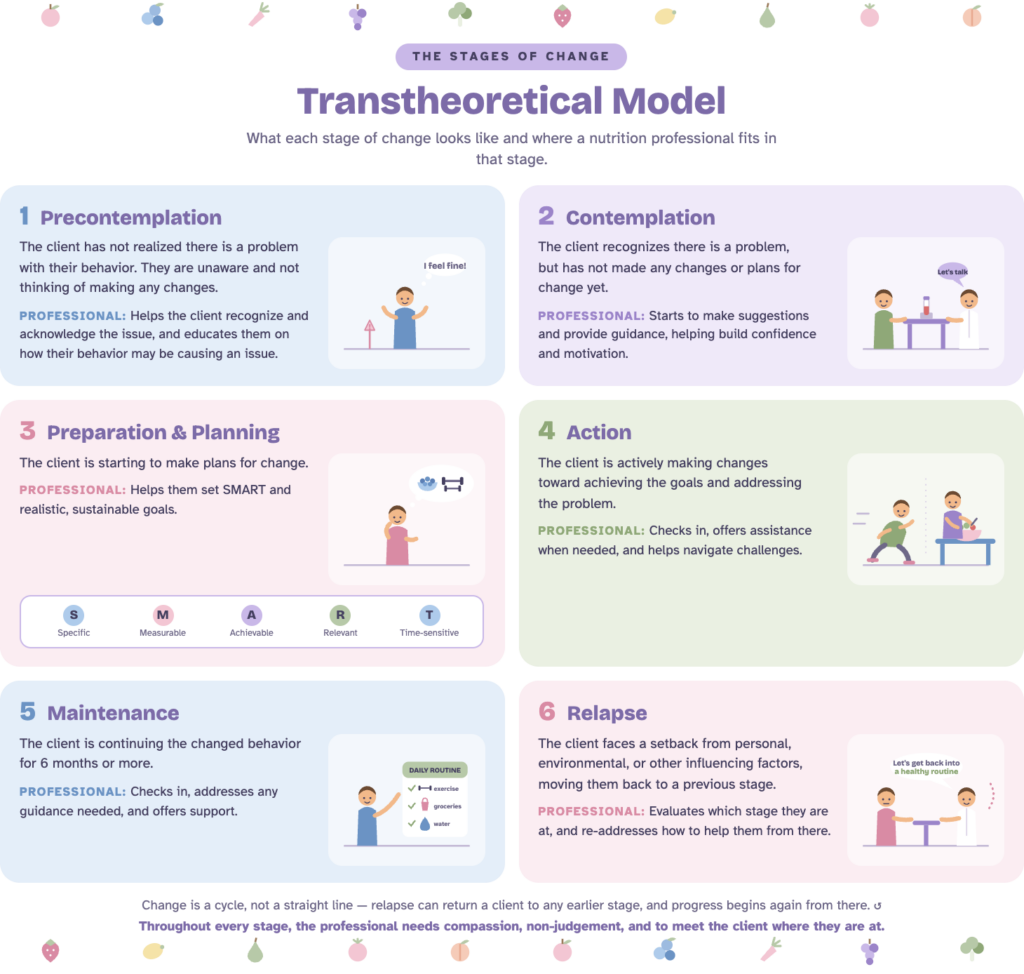
Information adapted from Mayfield BJ, ed. Communicating Nutrition: The Authoritative Guide. Academy of Nutrition and Dietetics; 2020:180-195. Graphics & visuals created using Claude AI Design.
Health at every size is an important practice I include in my approach. Below is an infographic I created that covers what HAES is, discusses misconceptions about it and why it is important!
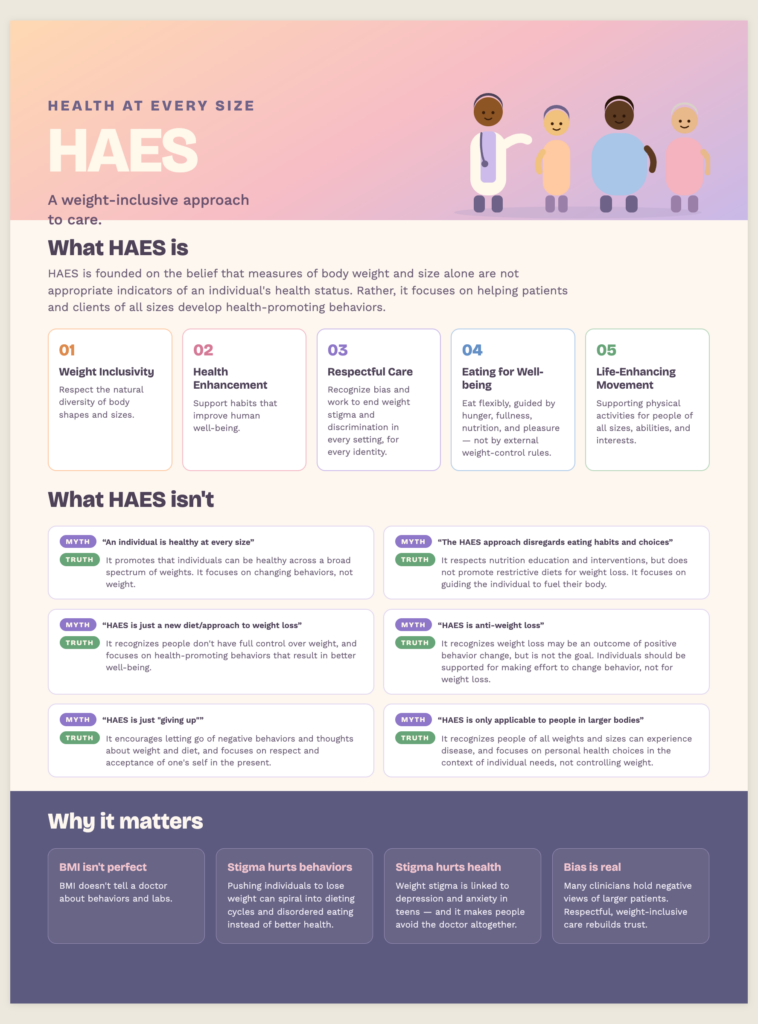
Information adapted from Rice L, Collins L. Health at Every Size®. Adolescent Nutrition; 2020. p. 317–337. Graphics and visuals created using Claude AI Design.